
Goal: design supply chains and logistics services that are on time, synchronized and solvable at real-world scale, by pairing rigorous formulations (VI, QAP, MINLP) with decomposition algorithms that exploit network structure.
At a glance: (1) perishable supply chains and multi-echelon distribution location · (2) synchronized service network design and large-scale decomposition algorithms · (3) service design with robust fuzzy QFD. Click any figure to enlarge it.
Real-World Case Studies at Scale
| Setting | Problem | Scale | Papers |
|---|---|---|---|
| Beijing–Shanghai HSR corridor | Perishable catering supply chain; lot-sizing distribution | 246 trains · 31 stations | Wu et al. 2018 TR-E; Wu et al. 2019 TR-E |
| China’s HSR network | Three-echelon location-routing for catering | 1,130 trains · 85 stations · 33 candidate distribution centers (plus a 156-train Beijing–Shanghai case) | Wu et al. 2017 TR-C |
| JD Logistics e-commerce network | Synchronized “second-wave” delivery services | 16 warehouses · 12 distribution centers · 20 pick-up stations | Wu et al. 2021 TR-B |
| Rail-to-truck transshipment terminal | Synchronized inbound / outbound services | 3 rail origins → 4 road destinations, time-expanded network | Wu et al. 2021 TR-B |
| Beijing–Shanghai corridor service stations | Robust fuzzy QFD for service design | 33 potential service stations | Wu et al. 2017 EJOR |
| China’s HSR network | Evidence-based fuzzy QFD | 85 candidate service stations | Wu et al. 2015 MPE |
1. Supply Chain
1.1 Perishable supply chains & multi-echelon distribution location
Every day, meals must move from suppliers to distribution centers (DCs), to rail stations, and onto thousands of trains with tight time windows and deadlines. A three-echelon location-routing model chooses DC locations and builds refrigerated-car routes directly from the train timetable.
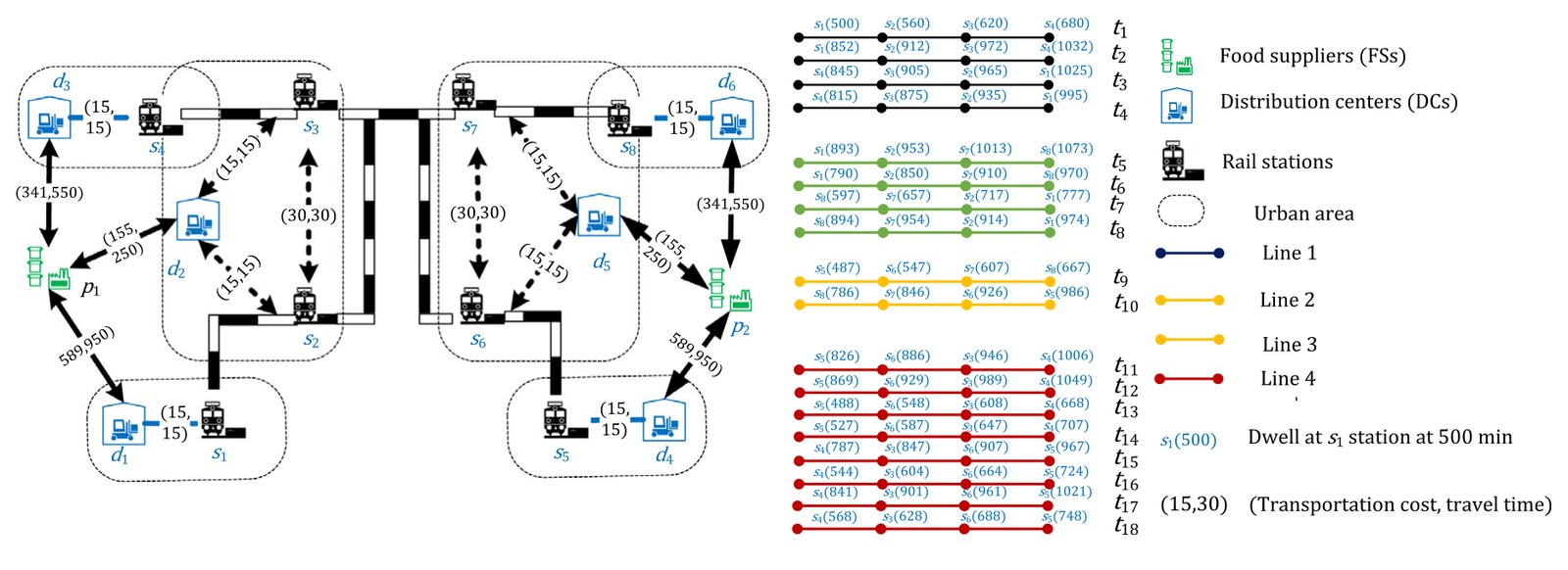
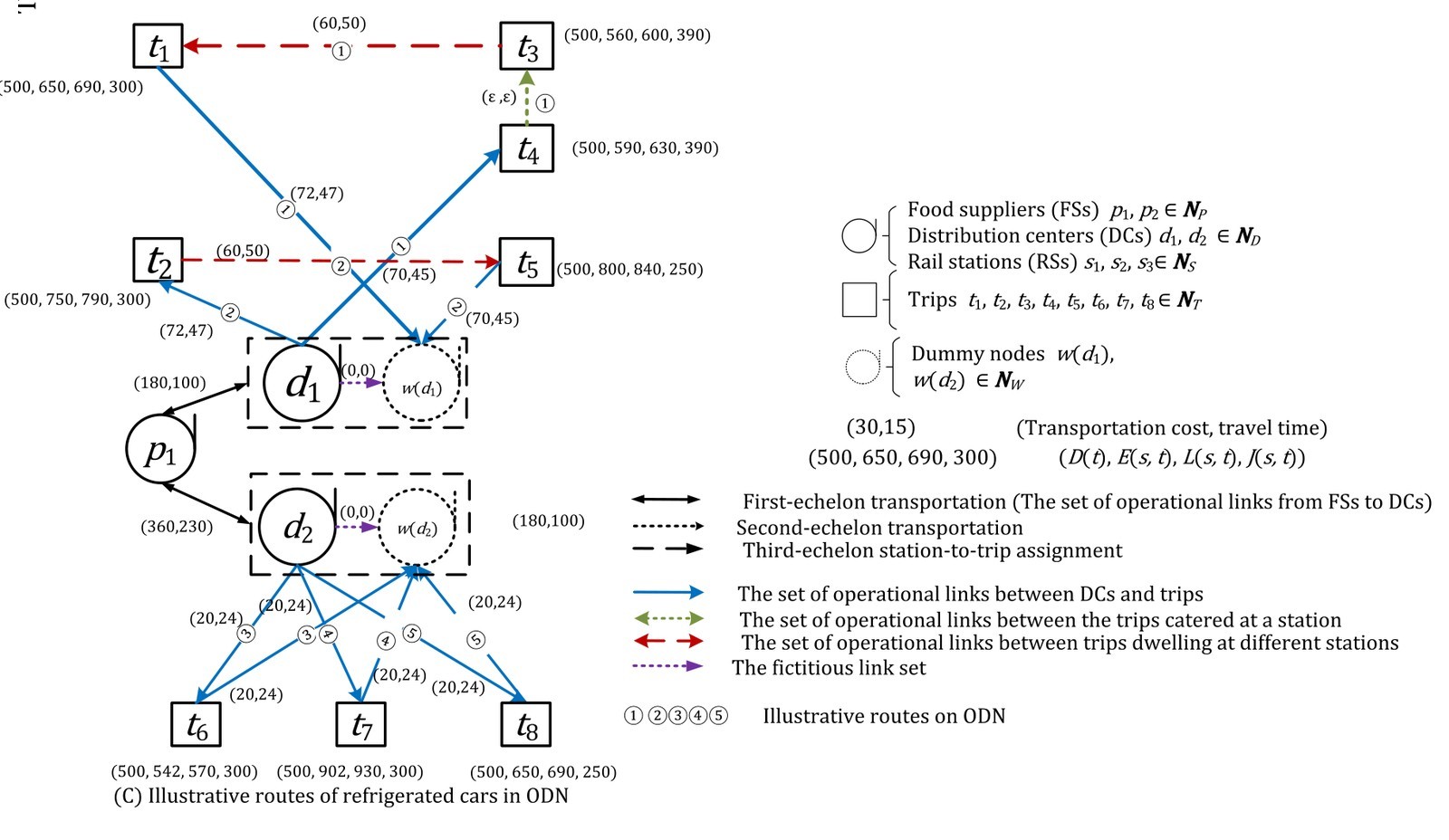
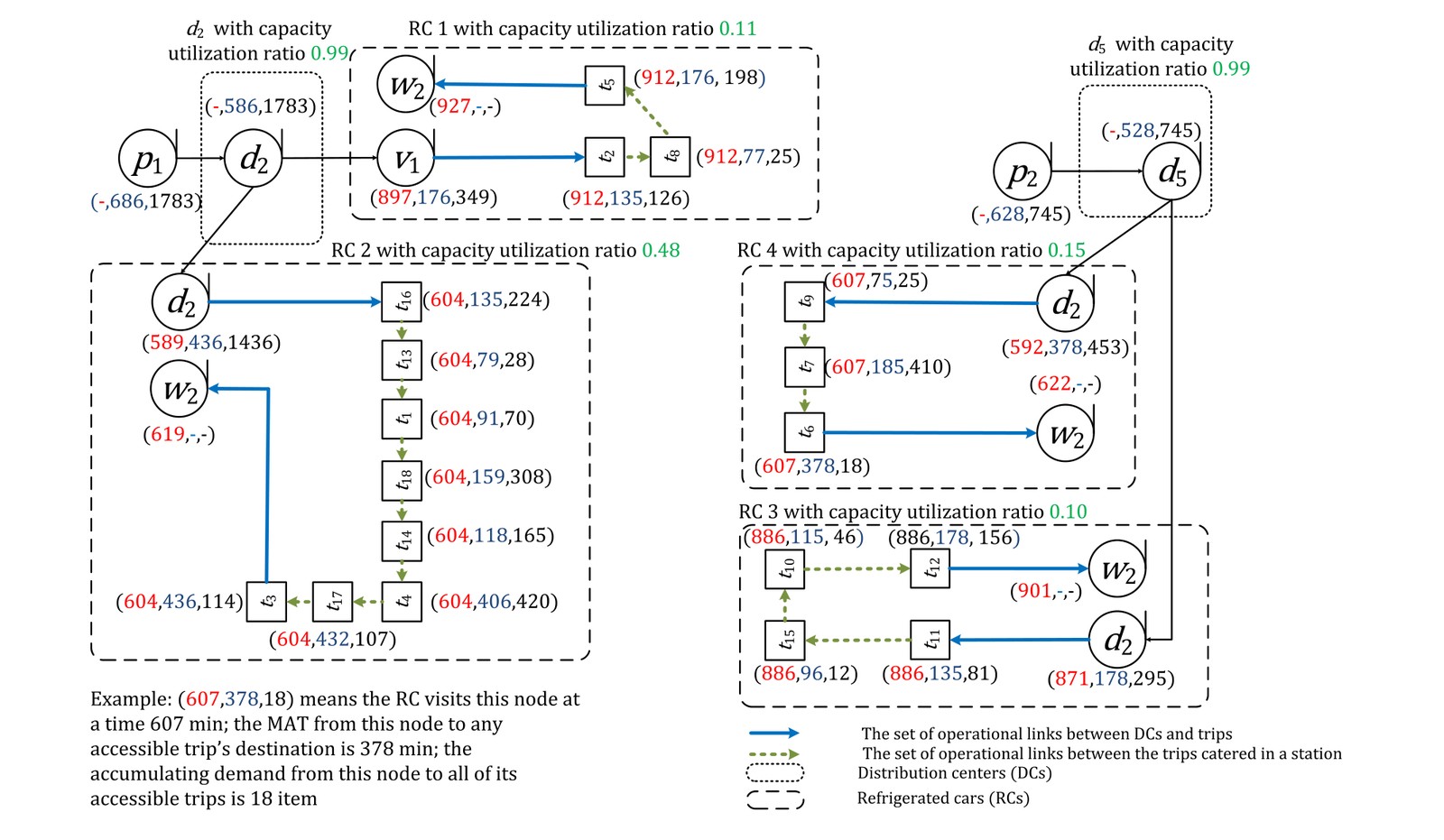
Wu, Nie & Xu (2017), Transportation Research Part C.
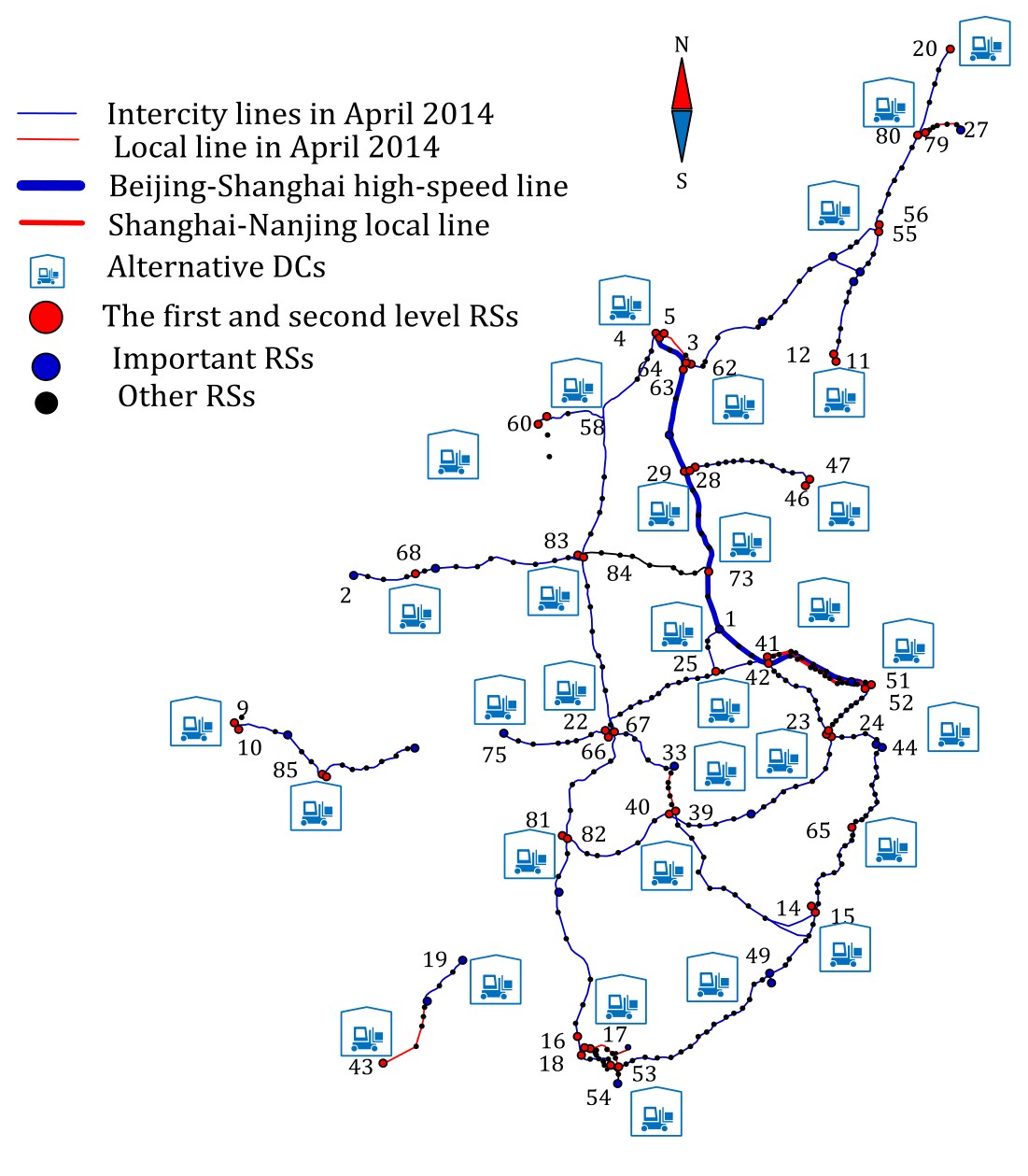
A variational inequality (VI) model captures the equilibrium of a perishable food supply chain with uncertain on-train demand (newsvendor) and path time-deadline constraints under flow-dependent lead times. Deadlines are reformulated with the Dirac delta function so they can be dualized, and the model is solved by an Euler algorithm with an augmented Lagrangian dual. The case study covers 246 trains on the Beijing–Shanghai corridor.
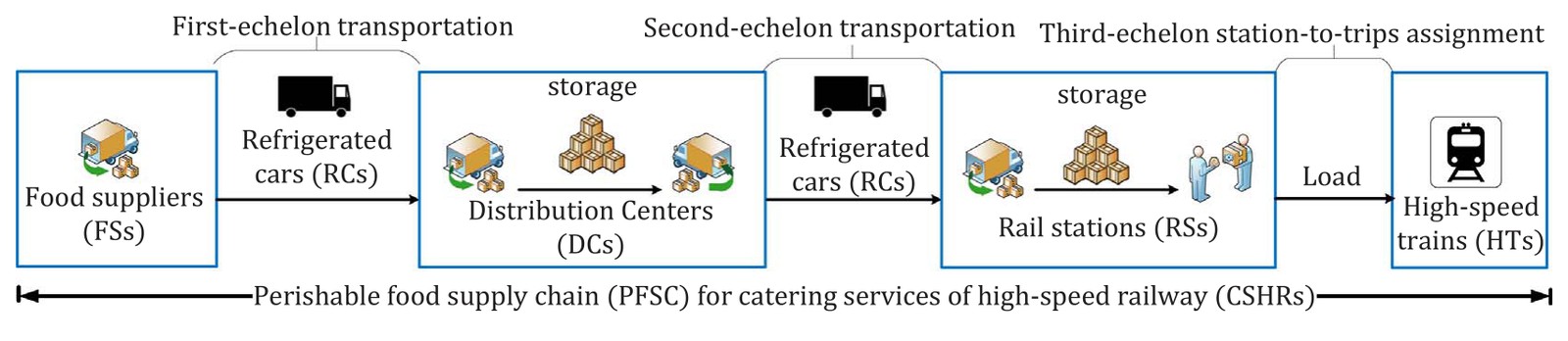
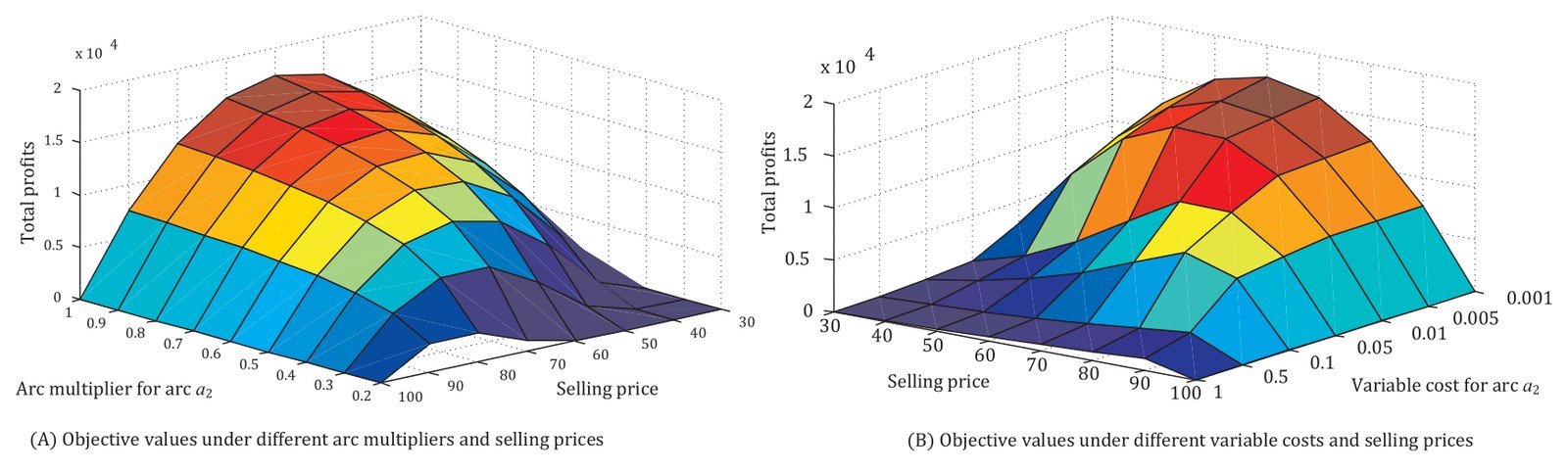
Wu, Nie, Xu & Yan (2018), Transportation Research Part E.
Insight: freshness is a path constraint, not an arc constraint. Writing it in VI form shows how deadlines reshape equilibrium flows and profits.
- Wu, X., Nie, L., Xu, M., Yan, F. (2018). A perishable food supply chain problem considering demand uncertainty and time deadline constraints: Modeling and application to a high-speed railway catering service. Transportation Research Part E, 111, 186–209. DOI
- Wu, X., Nie, L., Xu, M. (2017). Designing an integrated distribution system for catering services for high-speed railways: A three-echelon location routing model with tight time windows and time deadlines. Transportation Research Part C, 74, 212–244. DOI
- Jiang, Y., Wu, X., Chen, Y. (2020). Designing a flexible catering system for high-speed railway considering departure time selection and time deadline constraints. IEEE Access, 8, 44300–44317. DOI
1.2 Synchronized service network design & decomposition algorithms
In a transshipment hub, inbound and outbound services must be scheduled together so that goods are sorted and forwarded without long waits. I developed a network-based QAP (NET-QAP) that linearizes the classic Koopmans–Beckmann QAP and generalizes it, then solves it with an Extended Gilmore–Lawler Bound (EGLB) inside branch-and-bound.
This work was done with JD Logistics (Jingdong), and it is tested on two industry settings: a rail-to-truck transshipment terminal, and an e-commerce “second-wave” delivery network with 16 warehouses, 20 pick-up stations and 12 distribution centers, where orders placed before the afternoon cutoff are delivered by the next morning.
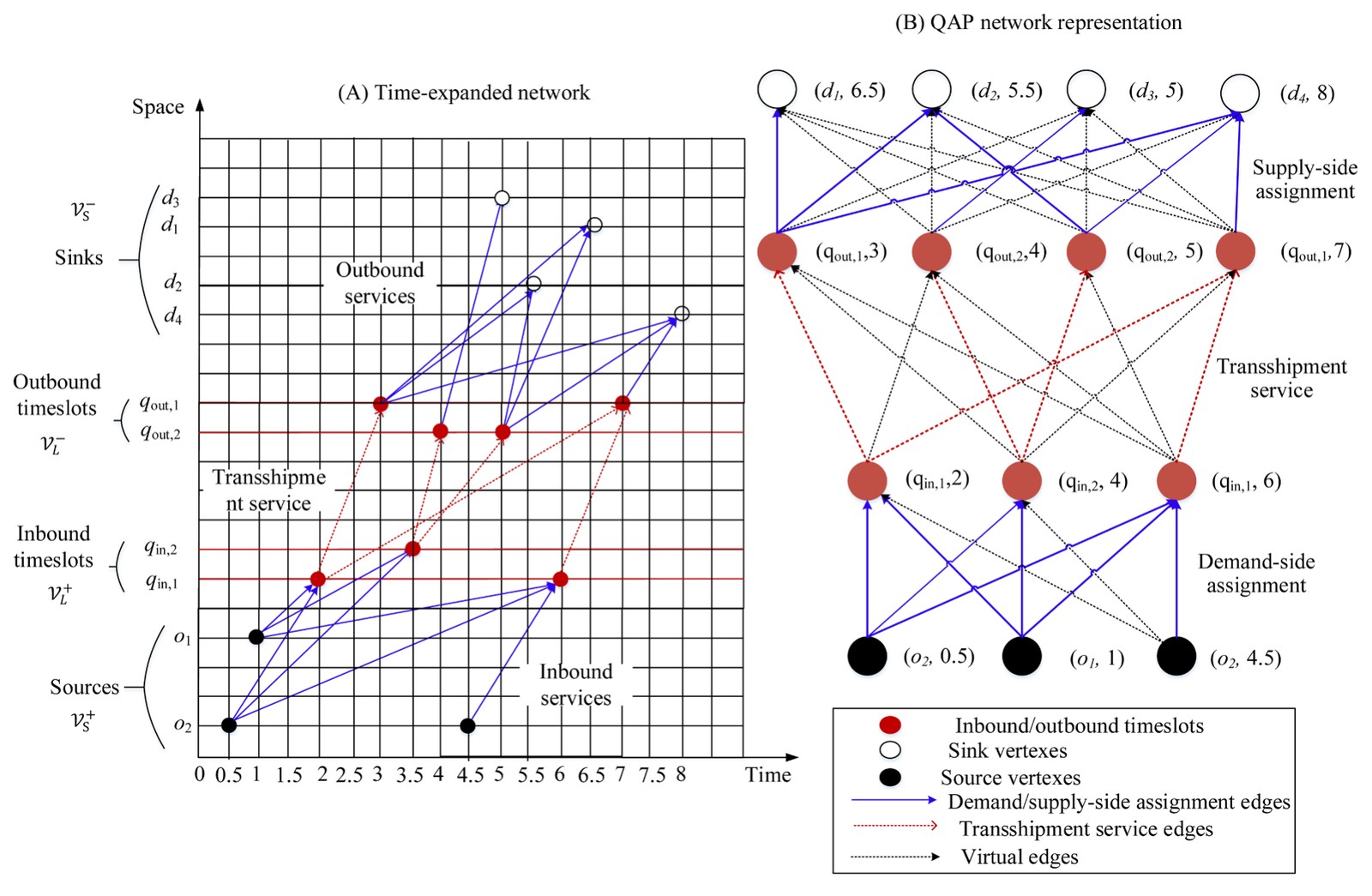
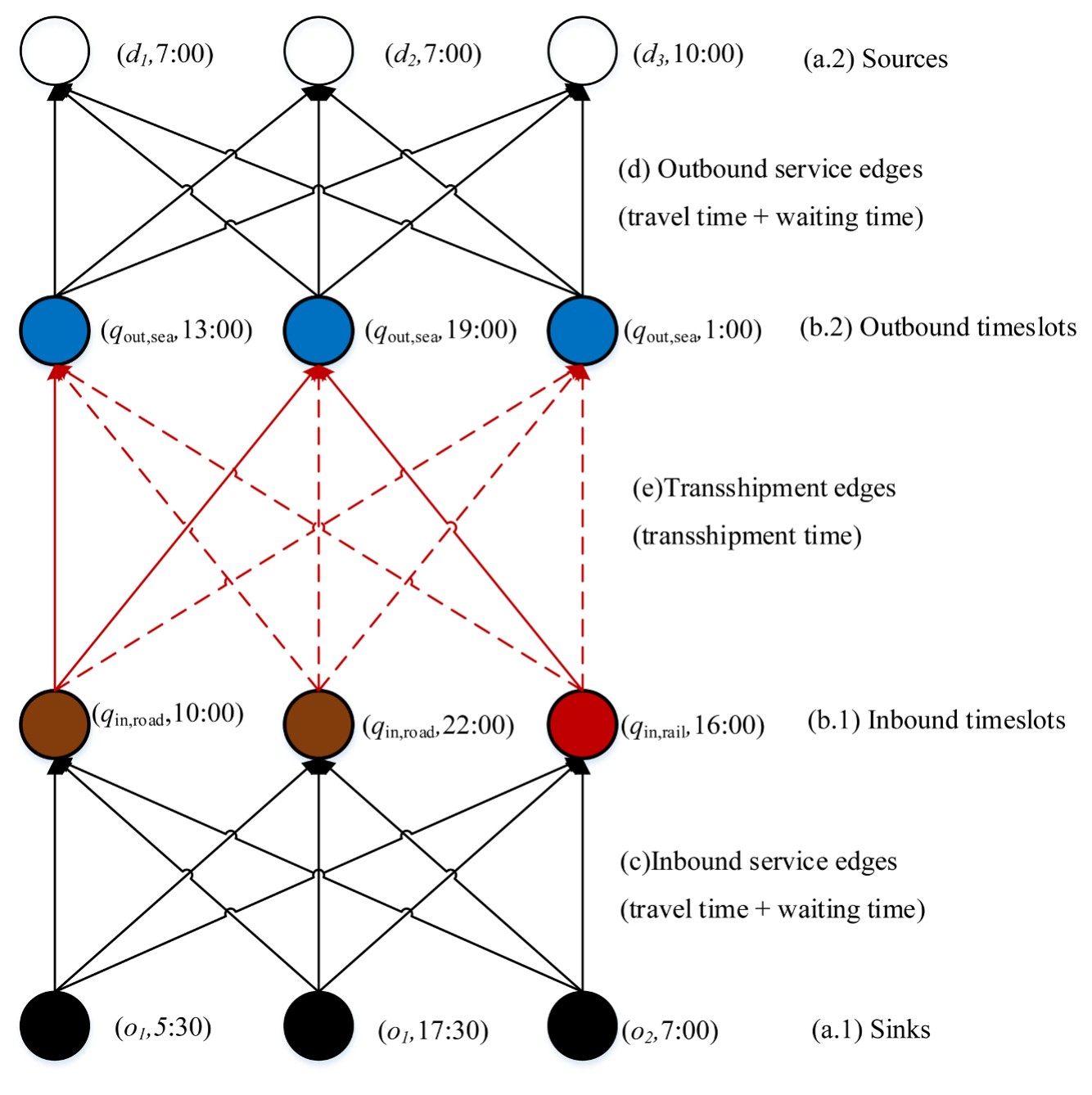
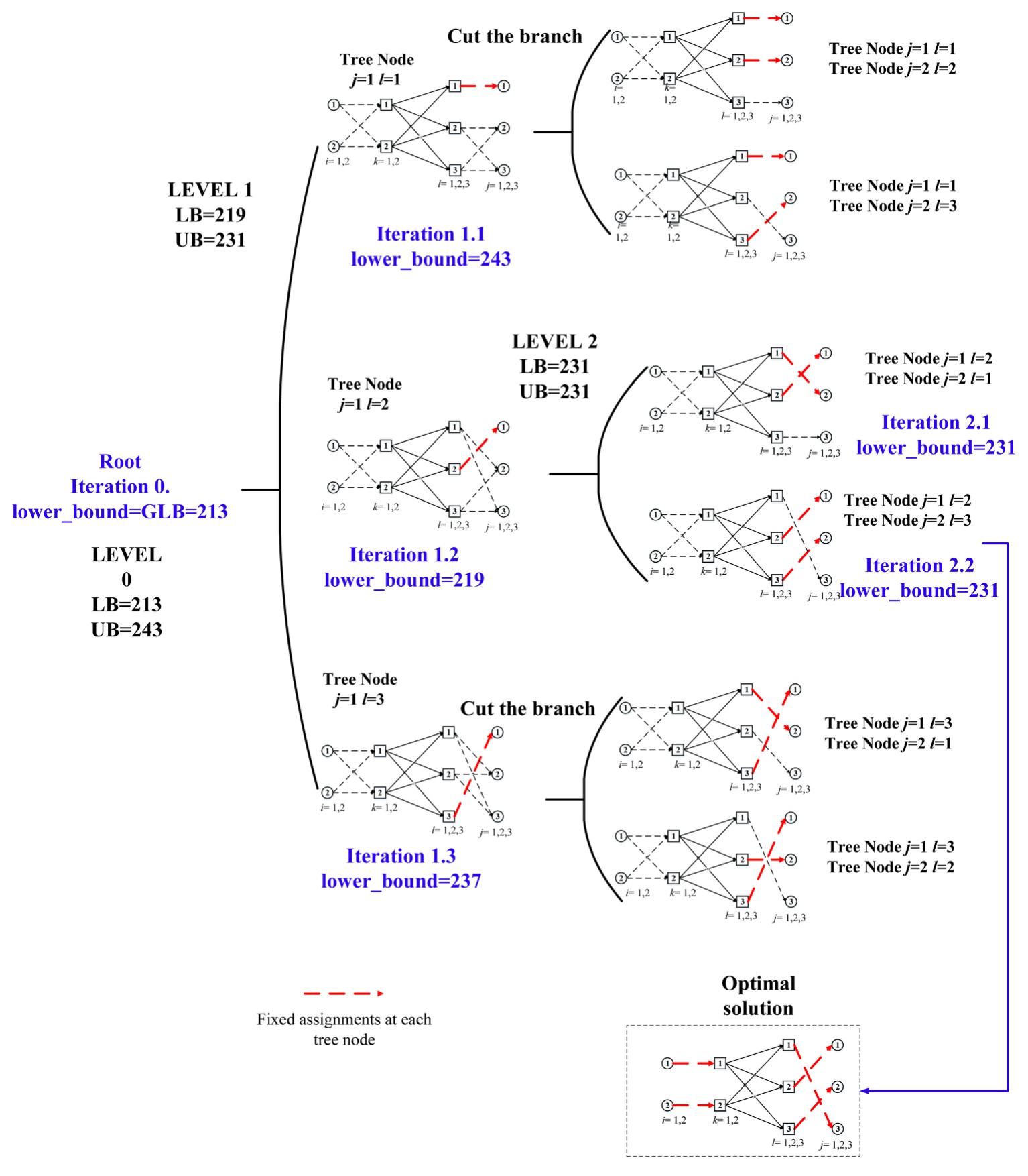
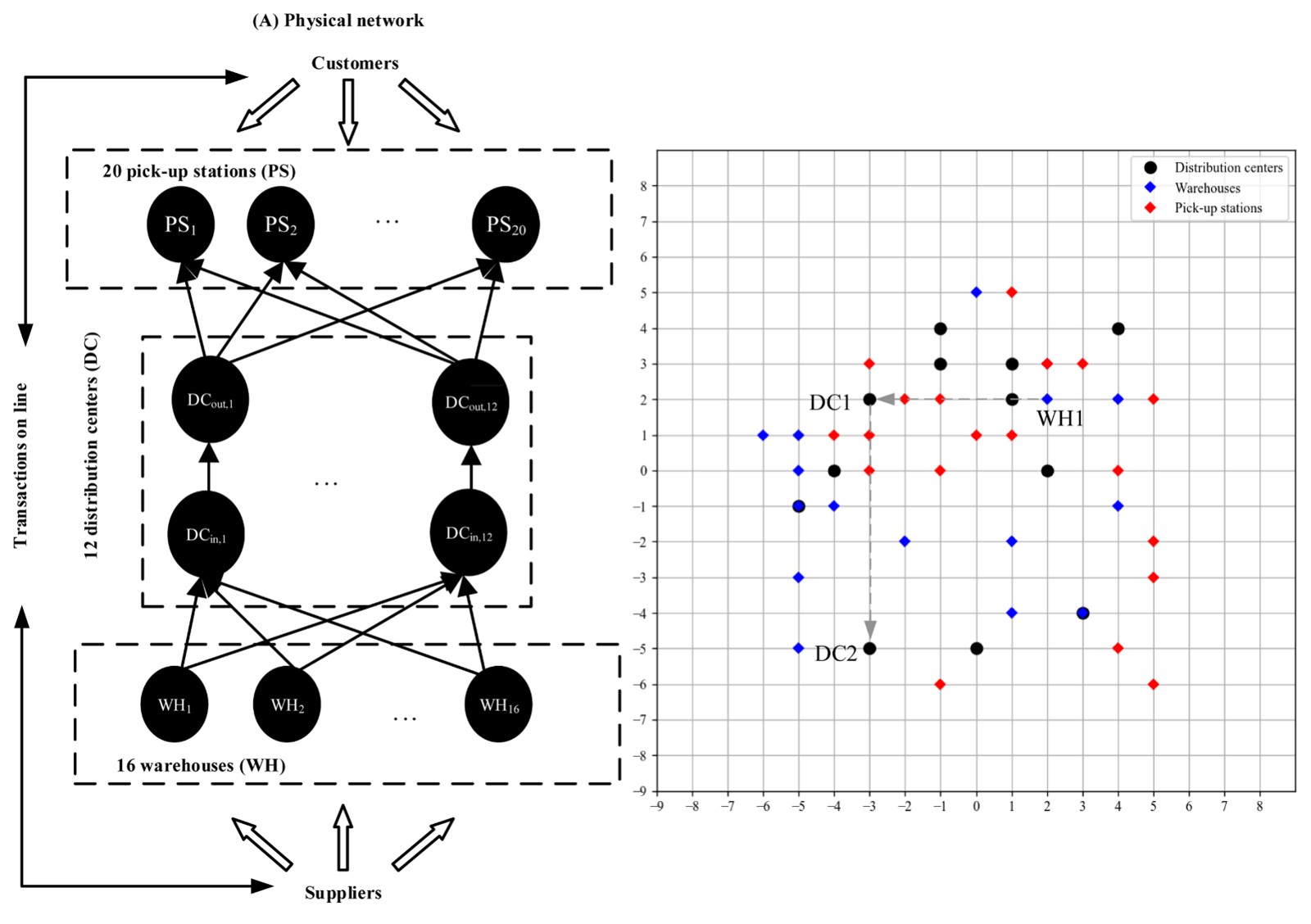
Wu, Lu, Wu & Zhou (2021), Transportation Research Part B.
Insight: viewing synchronization as an assignment of services to timeslots turns a hard scheduling problem into a QAP with a network structure, and that structure yields tight bounds and an efficient exact search.
Where should each food product be produced, which DC should serve which train, and how much should be replenished at each stop, when pedestrian congestion in stations slows handling? A nonlinear MIP on a lot-sizing network is decomposed by Lagrangian substitution into a MILP and a sequence of univariate concave problems.
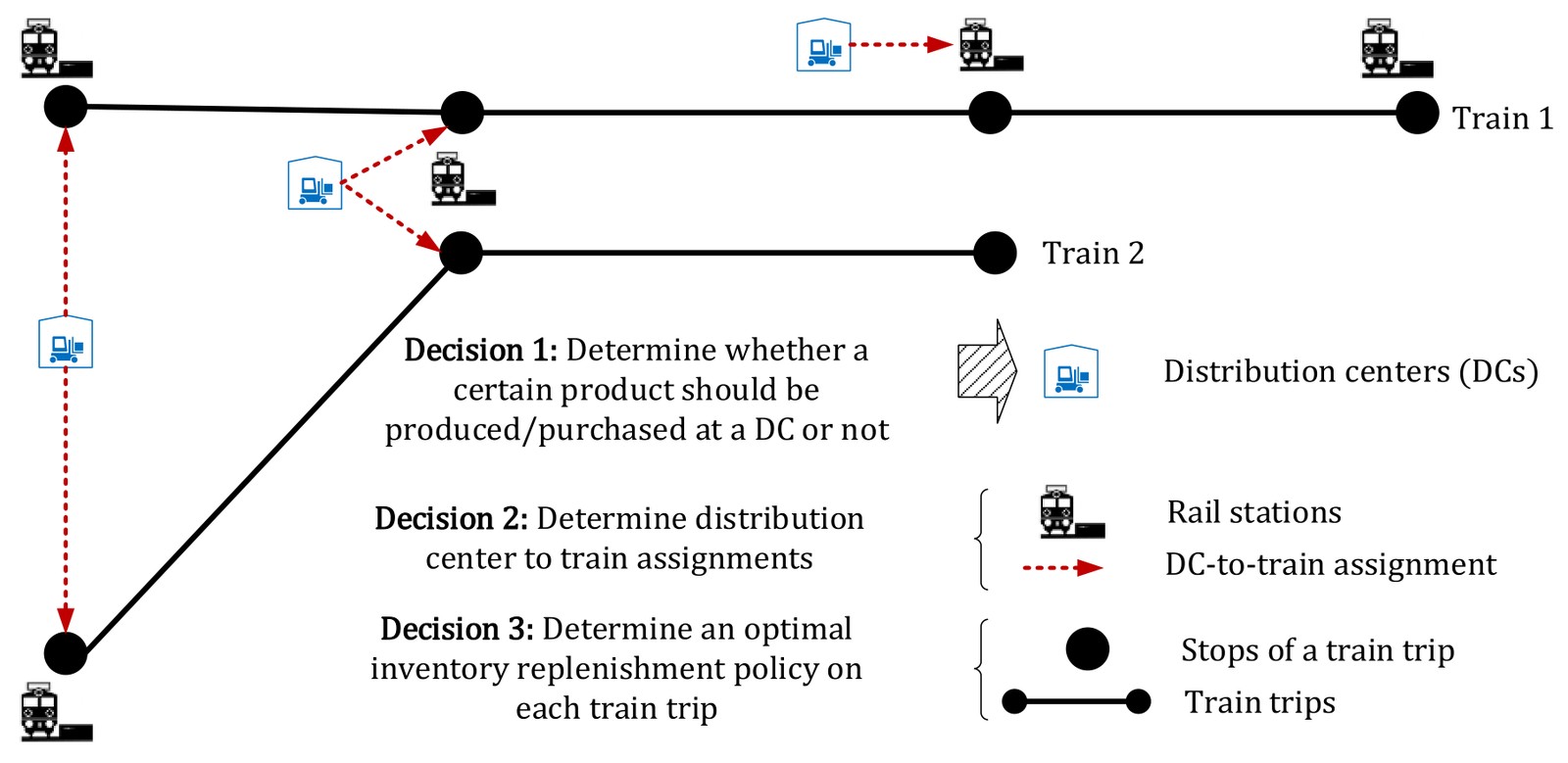
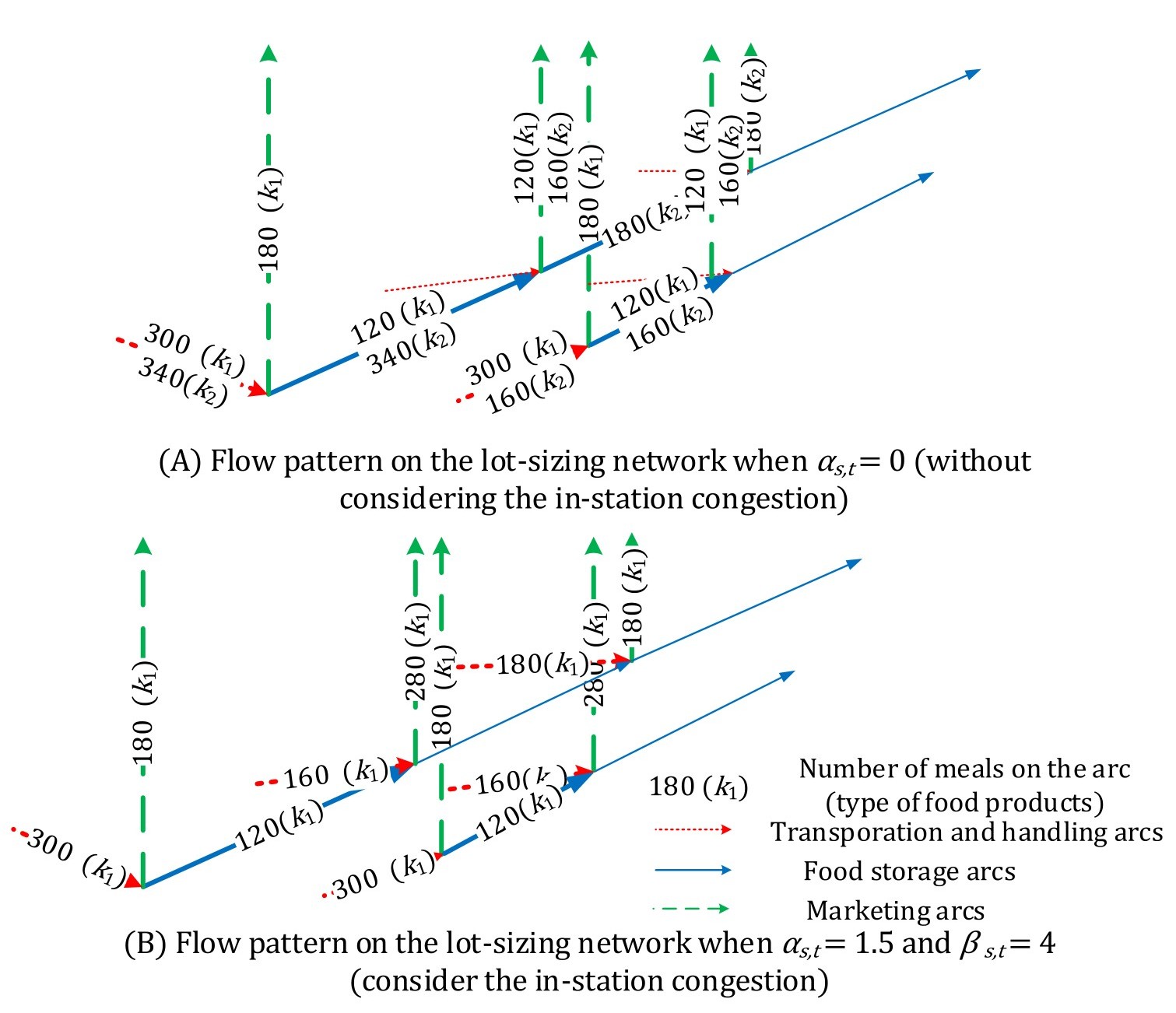
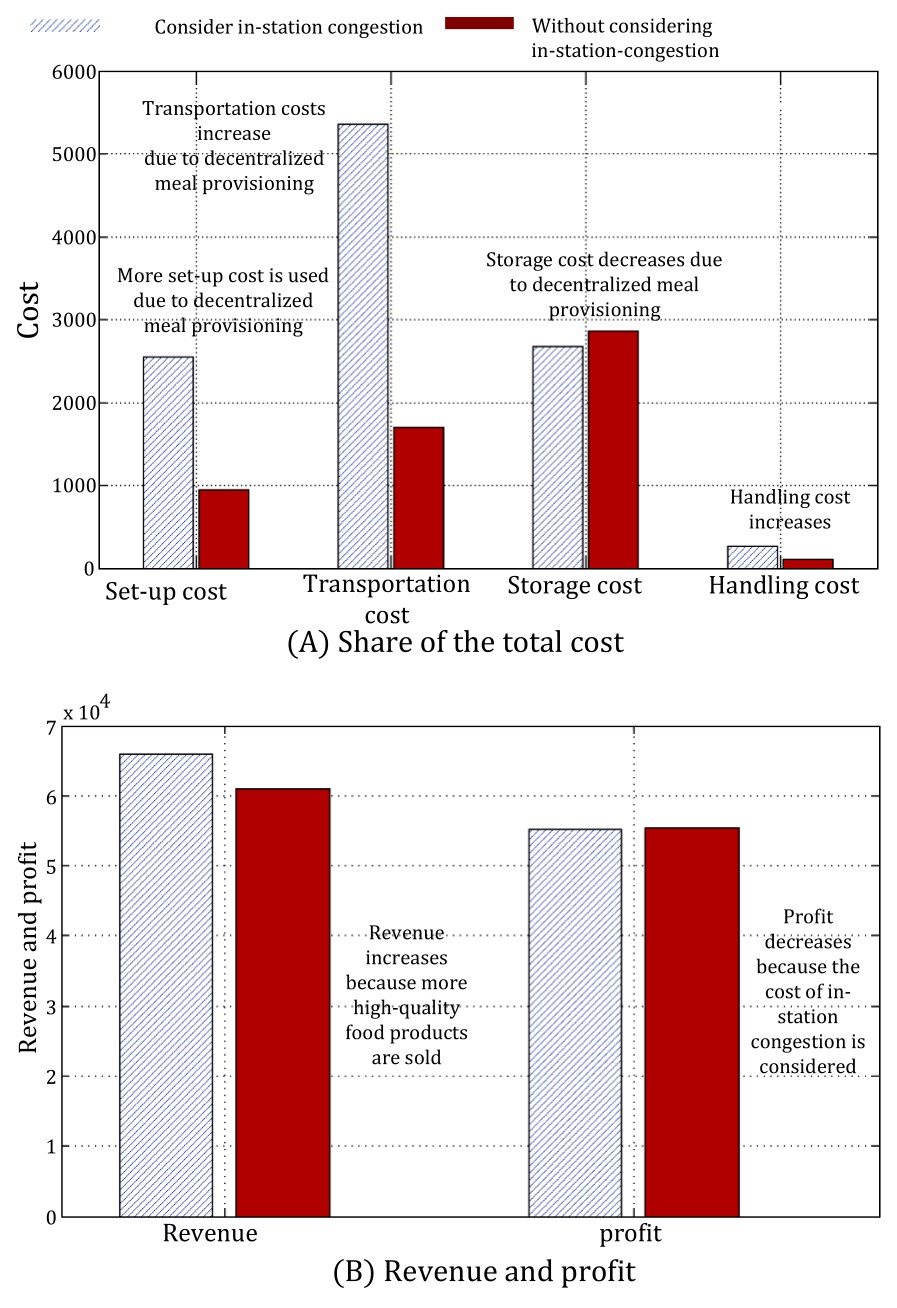
Wu, Nie, Xu & Zhao (2019), Transportation Research Part E.
- Wu, X., Lu, J., Wu, S., Zhou, X.S. (2021). Synchronizing time-dependent transportation services: Reformulation and solution algorithm using quadratic assignment problem. Transportation Research Part B, 152, 140–179. DOI
- Wu, X., Nie, L., Xu, M., Zhao, L. (2019). Distribution planning problem for a high-speed rail catering service considering time-varying demands and pedestrian congestion: A lot-sizing-based model and decomposition algorithm. Transportation Research Part E, 123, 61–89. DOI
- Jiang, Y., He, T., Xiong, J., Wu, X., Chen, Y. (2020). Parallel machine production and transportation operations’ scheduling with tight time windows. Complexity, 2020, 1381340. DOI
1.3 Service design & quality function deployment (QFD)
For service design, such as choosing service stations and DC locations, customer requirements are translated into technical decisions under fuzziness and randomness, using a two-phase fuzzy QFD that combines evidence theory with fuzzy sets, and a robust fuzzy QFD based on the mean-end-chain concept.
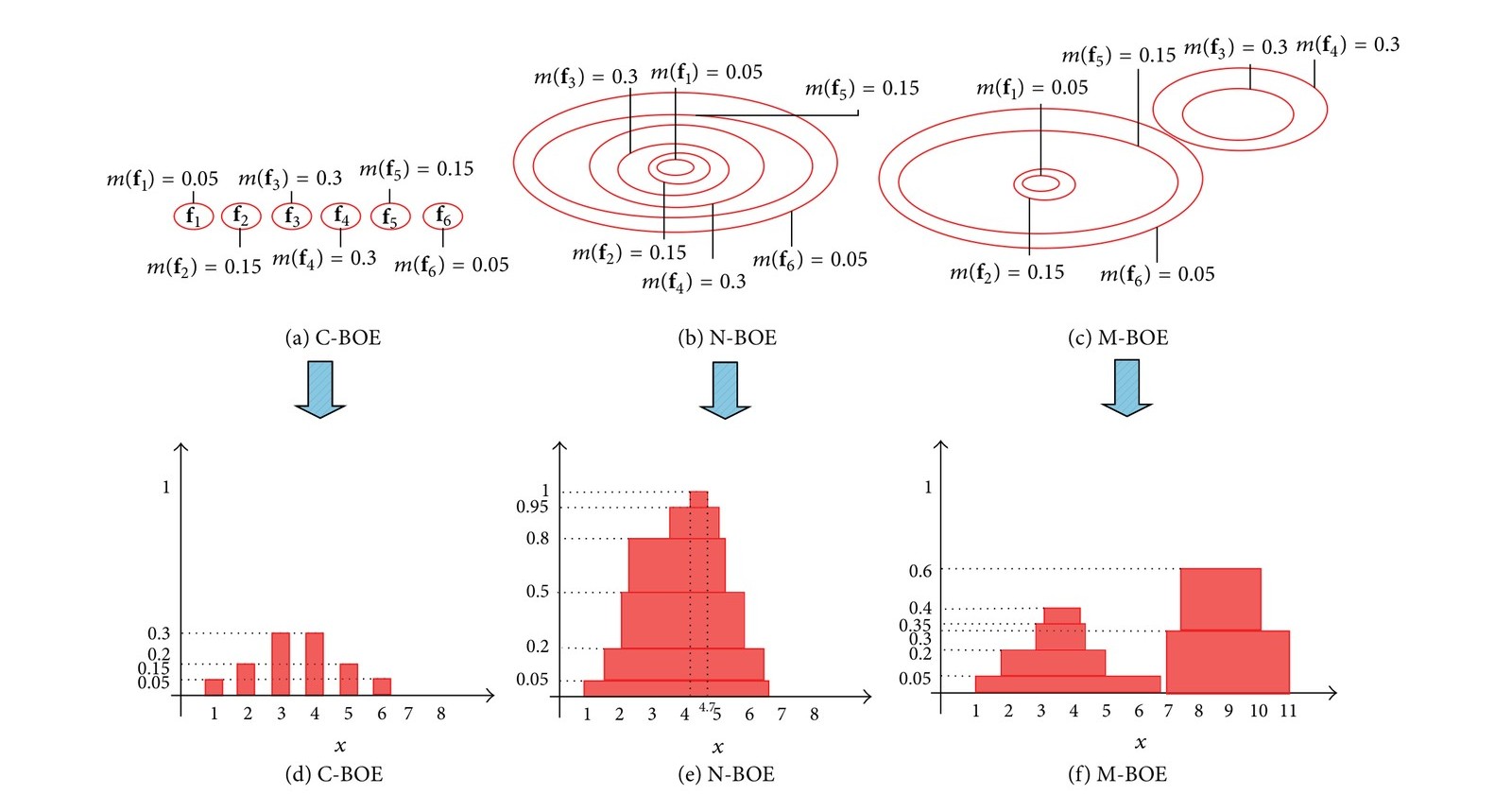
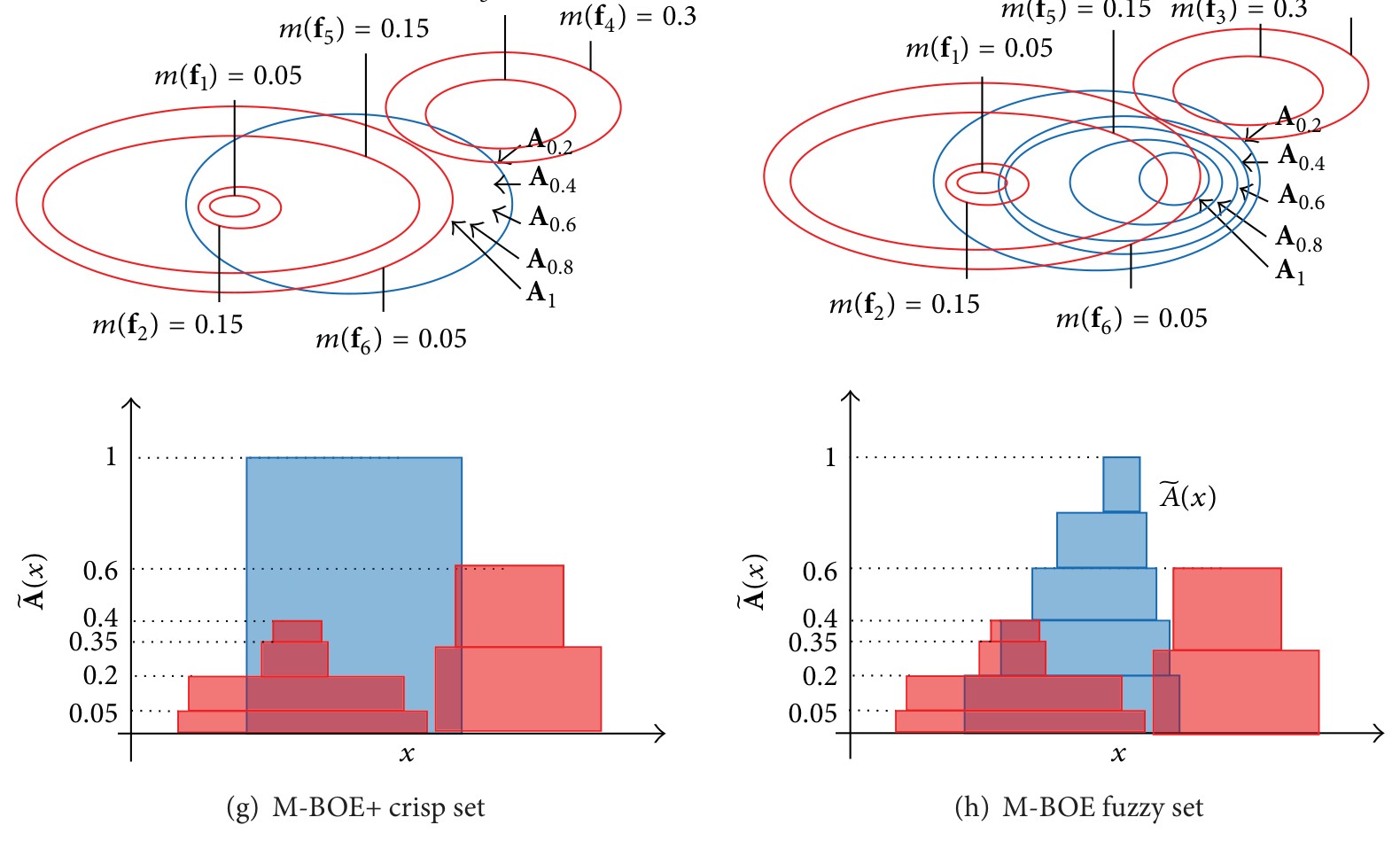
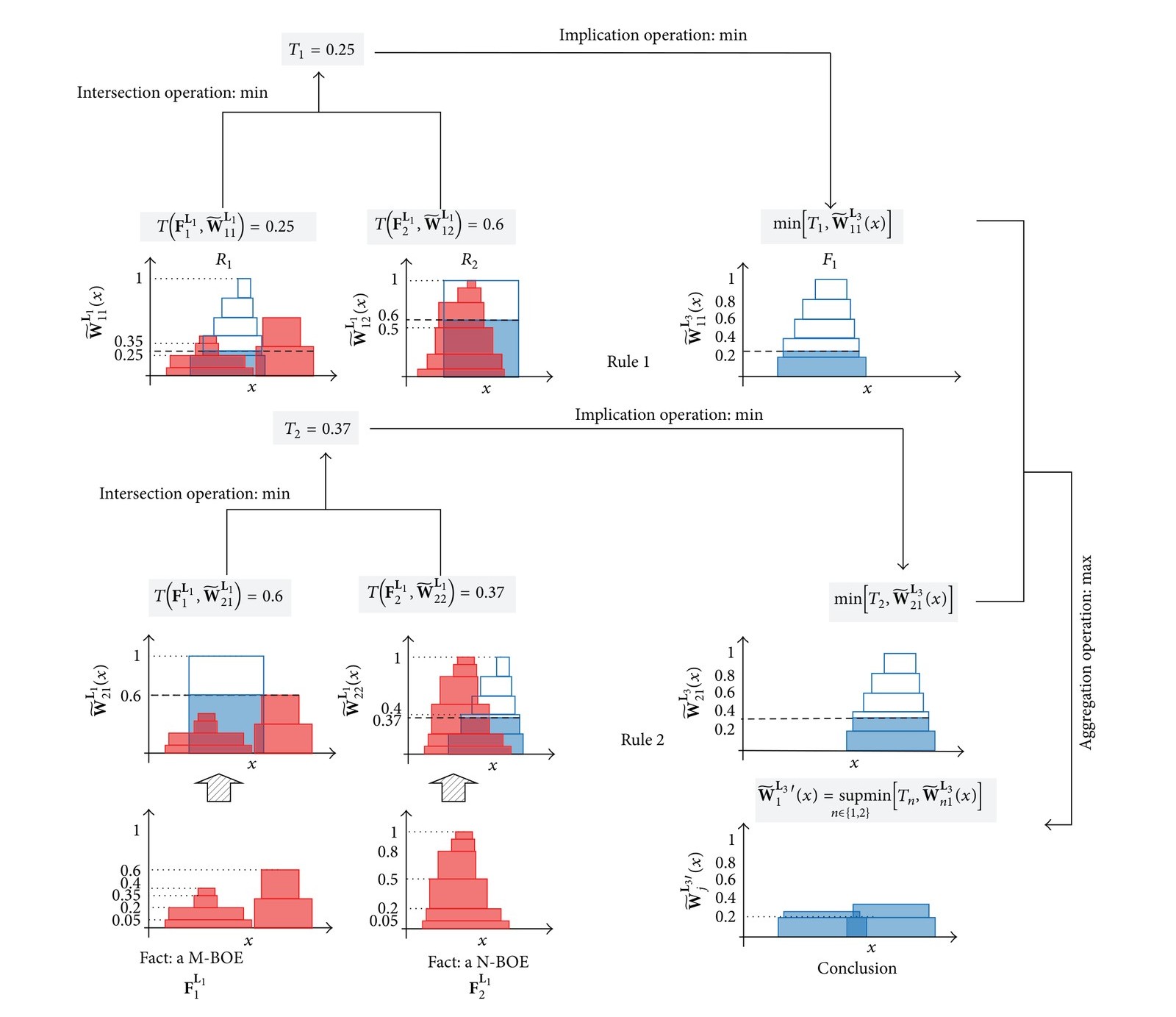
(a)–(d) Wu, Nie & Xu (2015), Mathematical Problems in Engineering.
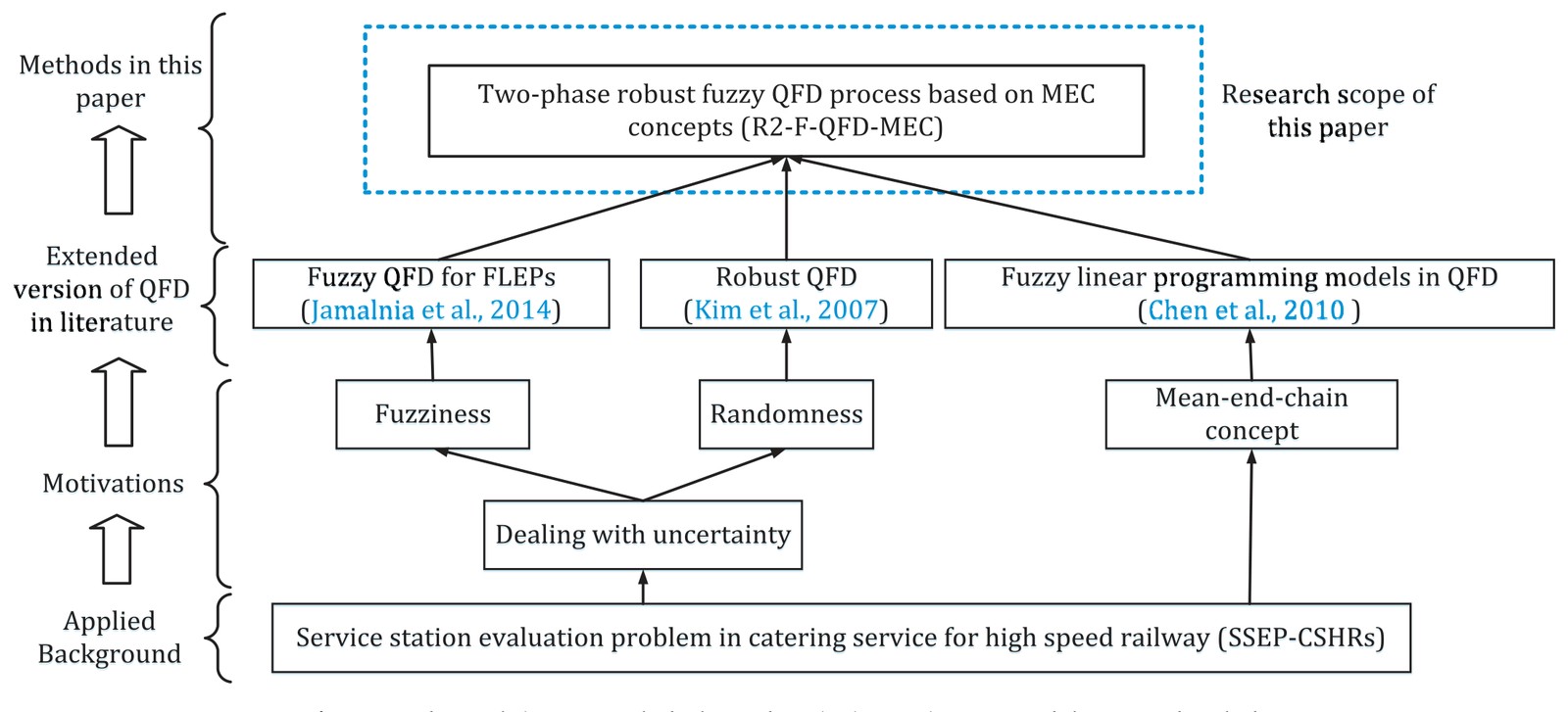
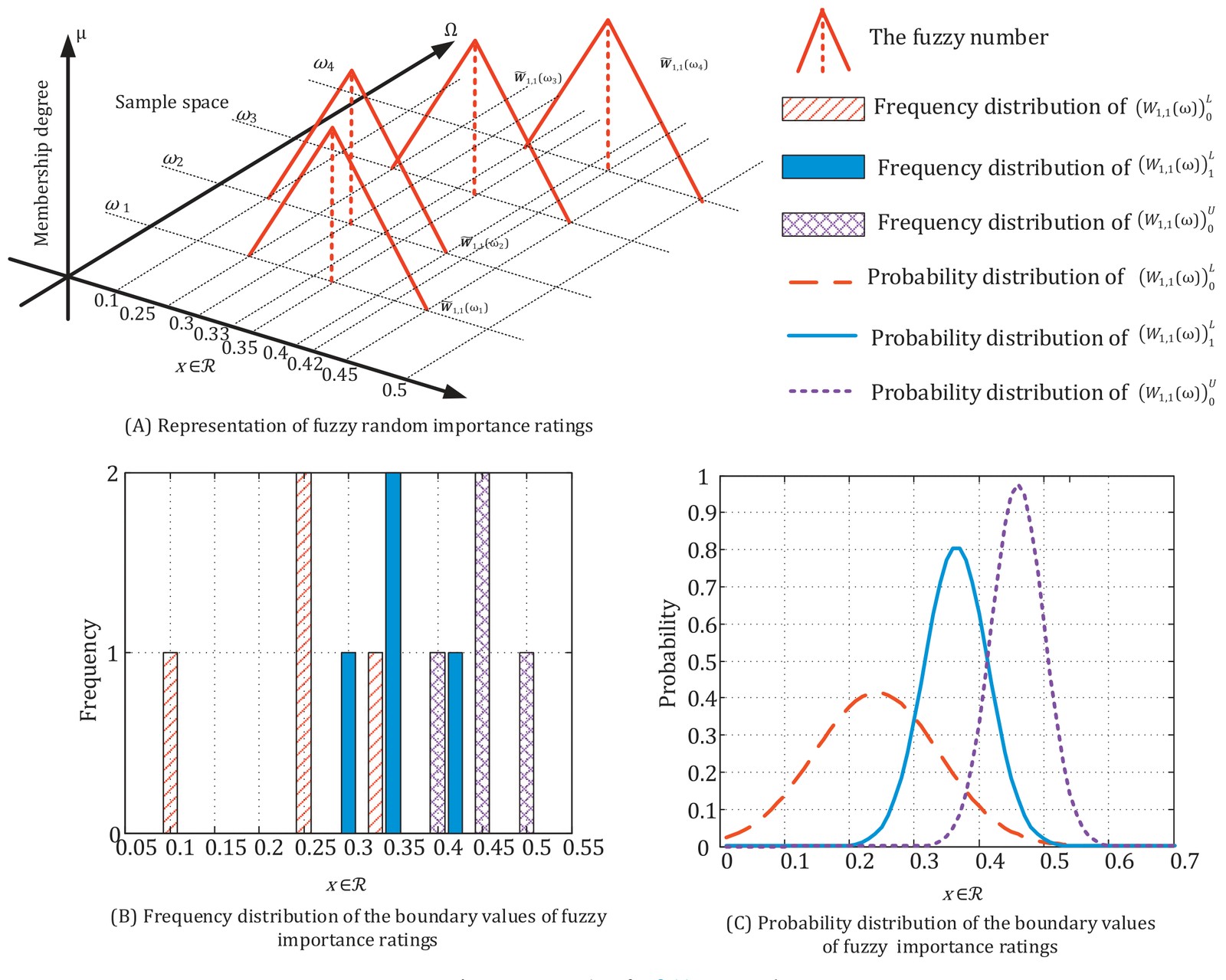
(e)–(f) Wu, Nie & Xu (2017), European Journal of Operational Research.
- Wu, X., Nie, L., Xu, M. (2017). Robust fuzzy quality function deployment based on the mean-end-chain concept: Service station evaluation problem for rail catering services. European Journal of Operational Research, 263(3), 974–995. DOI
- Wu, X., Nie, L., Xu, M. (2015). Service station evaluation problem in catering service of the high-speed railway: a fuzzy QFD approach based on evidence theory. Mathematical Problems in Engineering, 2015, 404926. DOI
- Wu, X., Nie, L., Xu, M., Fu, H. (2016). Fuzzy QFD for distribution center location evaluation in catering service of high-speed railway. Management & Engineering, 22, 83.
Figures are reproduced from the author’s own publications for scholarly, non-commercial illustration; please cite the original articles.